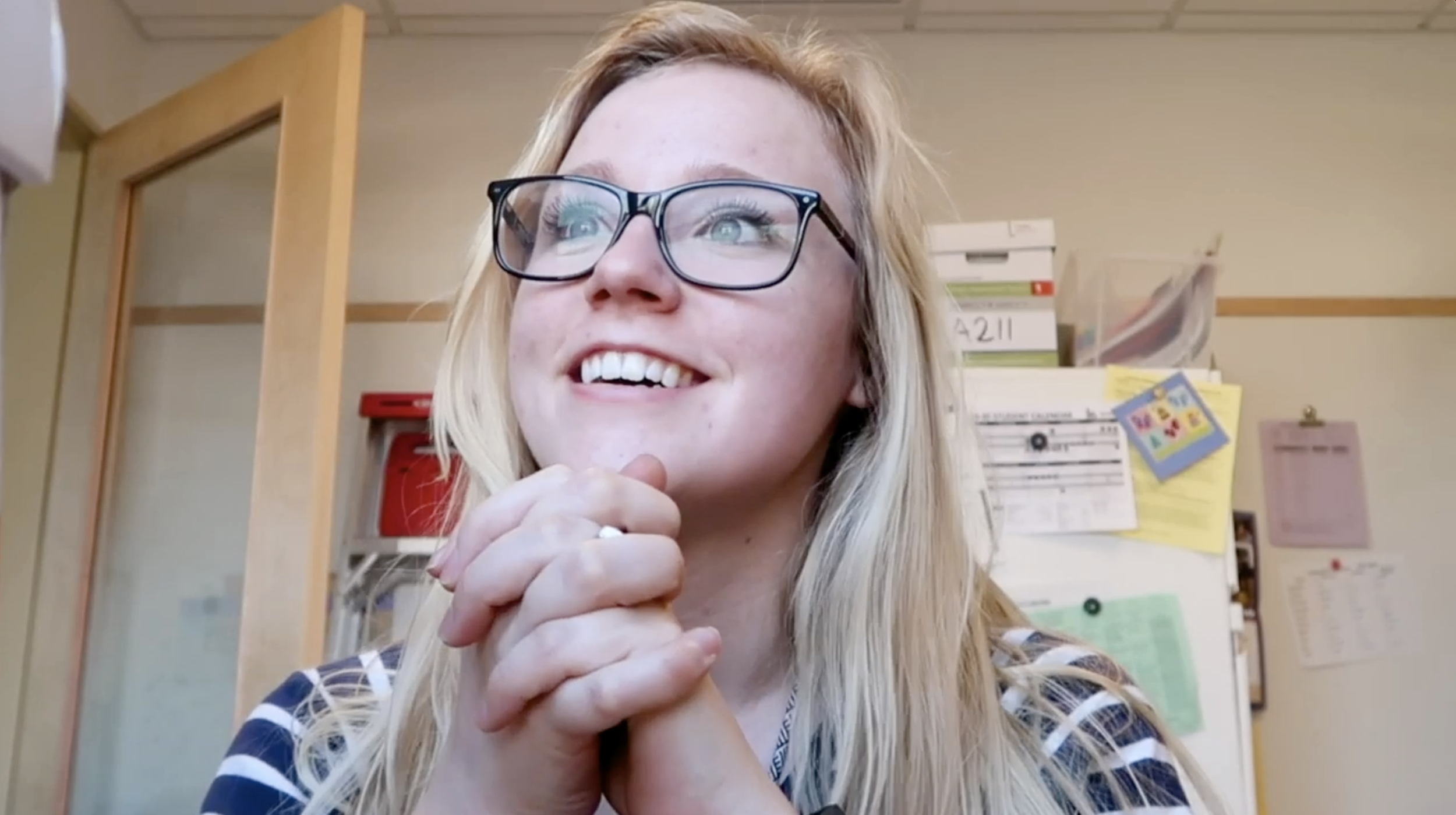
Juliet
JB: My name is Juliet Bressan. Im a general practitioner, a family practice
doctor in Dublin. Im part of an organization called Doctors
for Choice. We got together about a year or so ago to try to provide a
voice within the medical profession for women who had experienced abortion
and also for doctors who were in favor of a womans right to choose.
And Ive been quite active in that organization ever since.
MM (Mary McAuliffe): Is that very unusual in the medical profession in Ireland
to have doctors who will openly say
JB: Until recently, yes, most doctors really felt that they were quite silenced
in their opinions about whether or not a woman had a right to choose. I mean
I really think that, and we have found in our own experience, that a majority
of doctors are actually in favor of a womans right to choose, that they
are pro-choice. They prescribe contraception; they would like to take a much
more active part in the management of patients. But weve been silenced
by politics, by the law, by our own profession, by the Medical Council and
the bodies which govern our own profession, in a fairly organized way. So
doctors have traditionally felt that it was just something that you just cant
talk about. It is actually forbidden in the ethical guide of our own Medical
Council. They call it a "professional misconduct" if you provide
an abortion. That puts a really serious block on what doctors feel they can
do and talk about and so on.
MM: Most Americans know little or nothing about the situation of abortion
in Ireland. Could you just briefly outline the situation? Has it always been
illegal?
JB: Its been illegal since 1861that was when the Act was written,
which is the Offenses Against the Person Act, and that forbids abortion. But
its increasingly under attack in the last 20 years well say, mainly
as the result of anti-abortion activists in America who were worried about
the right to privacy in America having influenced reproductive rights there.
They were worried that would spill over into Ireland, and that, therefore,
a womans right to privacy here might eventually result in her being
about to access abortion rights. And so, in 1983, they organized a successful
campaign to put a clause in the Constitution, to amend the Constitution, which
would completely forbid abortion under any circumstances.
The effect of that was a very, very permanent ban on abortionbut not
just on providing abortion. It also resulted then in a ban on information,
taking library books out of the libraries, taking magazines out of circulation
which had adverts in them. Several cases were taken against counseling centers
and against doctors who were providing counseling and helping women to access
abortion abroad; they were forbidden from doing so, and counseling centers
were shut down. So that it had a very, very serious effect on reproductive
rights - not just on forbidding abortion but also preventing women from even
accessing it outside of the country.
MM: Could you briefly outline then what happened subsequently from that complete
and over-all ban to the sort of very gray situation that were in now?
JB: After 1983, the anti-abortion campaign became more and more confident
in what they were doing to prevent women from accessing abortion, and they
took several injunctions against various different family planning centers
and counselors, and students who were dissemanating information were forbidden
by law. They took library books, they took advertisements out of magazines,
and this kind of thing. The situation became very grave.
And, eventually, within 10 years, a situation happened which was called the
X case. This was a situation where a child who was 14 had been raped by the
father of a friend of hers, and the Court put an injunction preventing her
from leaving the country to have the abortion that she wanted. And this suddenly
horrified everybody. Because, up until then, I think the majority of people
in Ireland thought that, although abortion was not a good idea and it was
a nasty business and it was something that happened to "fallen women",
that it would never happen to anyone they knew. It was something they wouldnt
ever have to consider personally. There was such secrecy surrounding it, although,
obviously, hundreds of thousands of women had abortions, there was such secrecy
attached to it, that nobody knew specific details of how the circumstances
arise. But this case got into the papers, and it was such a painful example
of how this pro-life amendment campaign had succeeded in taking a childs
passport away from her, so that she could do nothing about a rape. The whole
situation became very real all of a sudden, and everybody in the country had
an opinion about it. And the vast majority of people wanted her to be allowed
to go ahead and have the abortion. They saw the reality that this was very
cruel, and as a result there was a massive demonstration. Thousands of people
marched in the streets of Dublin. People marched in New York. People mached
in other countries in solidarity with this one child.
And the case had to go back to the Court. It went to the Supreme Court, and
it was eventually ruled in the Supreme Court that she could go, that she could
have the abortion, that she could have it in Ireland as it turned out,
she went to England. But, basically, the Constitution was reinterpreted that
the right to life of the unborn child is there, but a woman has a right to
an abortion if her own life is at risk. And this was the case at the time
- the girl wanted to commit suicide.
But following own from that, people, as the result of the massive campaigning
and demonstrating and the fiore that was going on in the media, people became
aware of the reality, started talking about it. Women started ringing radio
shows, giving their real names, and saying, "Im Mary. I had 3 abortions.
I want to talk about it." There was this sort-of catharsis of emotion
that was coming out over the whole thing. People really felt that this was
so wrong that any woman could be treated like this, and particularly a child.
And, then following that there were another 3 amendments - we actually had
3 Amendments sort of all in the one go. One of them was proposing that you
cant have an abortion under any circumstances, and that was defeated,
2 to 1. The other other 2 were proposing that you should be allowed to travel
and that you should be allowed to have access to information; and they won,
2 to 1. So, basically, there was a complete sea-change in peoples ideas
in Ireland, going from, "the unborn has all the rights, the woman has
no rights," to, "the woman has the right to an abortion, the right
to go wherever she wants to get one, and the right to whatever information
she needs." And people felt, after that, that the sensible thing to do
now would be to put a law in place that would make sure that not only can
you access these rights you have in the Constitution, but that theres
a legal framework through which you can access these rights
but that
never happened. The politicians just all quickly put down the shutters, those
on the right wing and on the left wing. They were all terrified to take on
the Bishops. They couldnt possibly push it that one step further and
make it real.
[For an excellent and concise overview of abortion law in Ireland since 1861, which details many of the events mentioned above, see the IFPA's Irish Abortion fact sheet: http://www.ifpa.ie/campaigns/abortion/hist.html]
That was 10 years ago, and nothing happened legally for another 10 years,
but the pro-life were still organizing in the background. They still wanted
to drag back to the situation where nobody would ever get an abortion, either
here or abroad, even if they wanted to kill themselves. So they proposed another
amendment which would be to get rid of that Supreme Court decision which had
allowed the right to have an abortion, the right to travel, the
right to information. They wanted to get rid of all that. And they specifically
wanted to get rid of it in the case of a woman who was suicidal. They proposed
an amendment to the Constitution that the unborn has a right to life, and
that the only woman who can get an abortion is a woman who is dying of an
illness which is not of her own cause. You know, which is not mental illness,
which is not risk of suicide, and so on. And they also proposed that there
would be a 12 year jail sentence that would go for any woman who wanted an
abortion or for any doctor or nurse or counselor who helped her.
That
was defeatedthankfully. But it was such an awful thing to propose
at this stage when wed gone through the X case and there were
very many others; the X case was the first but there were many other children
and other women who presented with terrible problems like this. And after
all wed been through, and all the trauma that women had eventually got
to express about their own private lives, that anyone could propose this was
just horrifying. It was defeated. But that was almost a year ago now, and
we have still not got a proper law in place which will guarantee womens
rights. Because, in the end of the day, its all very well to say, "This
is what could happen in theory, and whats in the Constitution is a very
theoretical sort of framework," its not a law, and you dont
always feel that youve got a right to act in a certain way unless youve
got a law to protect you. And, therefore, women still feel obliged to go abroad.
They still feel, "I cant go to my own doctor and say, Listen,
I want my right to have an abortion here. I feel my life is at risk or I feel
my mental health is at risk and I want you to help me here." Women
dont feel that confidence, and doctors dont feel it either because
were up againststillthe Church, theyre still there,
despite all the evil thats been exposed. Theyre still there. And
also, the government is still very, very anti-women on this particular issue.
Unfortunately, the political opposition is there too. The political opposition,
despite what they will say to you privately about being in favor of womens
rights and being pro-choice, in public they will never ever admit that. They
will always stay quiet on it.
MM: Could you talk about Women
On Waves? Who they were. What they wanted to achieve. What actually did
happen when the boat came.
JB: Women
On Waves were a group of Dutch doctors, nurses, and activists who were
very interested in the international problem of illegal abortion. They identified
Ireland because were in Europe, we have the worst law on abortion in
Europe, we have the most Draconian law, and they saw it as the most urgent
example of a country where they needed to get active and go and try to help
women who were trying to access abortion.
What they did was they organized a ship which could sail to Ireland with reproductive
information, with counseling facilities, and with abortion facilities in the
hope thatthe main thing that they wanted to do was to raise awareness
of the suffering that goes on amongst Irish women and also to provide confidence
to Irish women and to the pro-choice movement here that were not in
the dark, that were not on our own, that there is a broader movement
out there. So they organized to bring the ship to Ireland in June of last
year. It was a fantastic project. It was extremely popular with Irish women.
One of the extraordinary things that happened was that, before they came over
over, several of us who were in the pro-choice movement met with the women
who worked on the ship, and we discussed the possibilities of, "Are women
going to actually go down to this ship in broad daylight and in front of television
cameras and look for an abortion? Is that going to happen?" And we really
felt in Ireland that it wasnt
that women here were far too scared,
that they were too vulnerable, too frightened. This was the tradition, and
it was true that women here had always been so silenced and so forbidden from
speaking about this that they would not in any way attempt to approach this
ship in public. We thought we might get 1 or 2 phone calls but that was it.
So we thought that the ship would come here and that it would mainly be as
an education and an attention-raising exercise.
And we couldnt have been more wrong because of hundreds of women phoned
looking for an abortion on the ship, and they didnt mind tv cameras,
they were quite happy to walk down that gang plank onto the ship in broad
daylight, in front of all the tv cameras in the world: they were so desperate.
And it was heart-breaking, the level of desperation that those women expressed,
but it woke us all up. Very much so. And, especially, doctors and nurses who
had always thought that, although we meet women all the time who need abortions
and we help them, and we counsel, and so on, wed always thought that
those women had no confidence and they would never stand up for themselves.
And yet, there they were. And the ship was hugely popular with ordinary people.
The Irish media really tried to black it out and really tried to not show
what was going on but the international media were very interested, because
it really exposed the gross abuse of human rights that goes on in Ireland.
One of the great things that also happened when the ship was here was that
doctors started to get organized. I mean, partly, we were shamed into organizing
ourselves but also we developed the confidence to realize that the patients
cant just be assumed, you know, to want to remain in silence like thisthat
this is a really important health issue. And we started to organize and several
of us then formed the organization Doctors
for Choice, which we built links with other pro-choice doctors in Perch
and in America, and doctors in Britain, and so on. So thats been a huge
step forward for the medical profession in Ireland.
MM: Did you get opposition from within the profession to Doctors for Choice?
JB: Yes. I mean there a significant minority of doctors in Ireland who are
very, very, very firmly anti-abortion and very closely linked to the Church,
and will do anything to ban abortion, no matter what it takes. And theyre
usually very politically active. They go onto the Medical Council; they try
to get onto the Royal College bodies and this kind of thing, and the Irish
Medical Organization
you know, theyre very very active and fervent
fundamentalists. And, yes, theyve been desperately trying to complain
about us. But theyre very small in number, actually, this is what weve
found, and that the vast majority of doctors completely support us. Weve
had huge messages of support from doctors all around Ireland. So it really
hasnt been a problemthe level of opposition. And, its usually
on religious grounds, which is fine. But, were a medical organization.
We want to be able to provide health care so, therefore, were not going
to discriminate on religious grounds. Its not an issue for medicine.
Medicine is about science; its not about religion.
MT (Melissa Thompson): Id like to ask one clarifying question. Could
we go back to Women
On Waves? Just because Americans wouldnt be familiar with what happened,
could you say what did happendid women actually get abortions on the
ship? What happened in the end?
JB: The Women on Waves project initially planned to come Dublin and Cork.
They had a small container on board with a little mini-clinical room or procedures
room. And they were hoping to be able to provide for the small numbers of
women which we expectedyou know, a handful of womenthat they would
provide a very early termination of pregnancy. But, unfortunately at the last
minute, the Dutch government forbade them a license to practice. They could
have also provided mifepristone, which is an abortion pill; and, again, the
Dutch government forbade that at the last minute. But they set sail anyway,
because there was a huge amount of interest in the project, there was huge
emotion that had gone into itlots of planning, lots of funding and so
onand they felt that the best thing to do is to set sail and to come
and have the publicity raising exercise, provide information and support to
women in Ireland, and carry on with the project. Which they did. It was great
that they did that, that they werent scared off at the last minute.
Because, although they couldnt provide any abortions on board, they
had never planned to provide the hundreds that were demanded anyway. And,
all of the womenthey were able to help to refer them on to other providers
in the UK and in Holland, and so on. So, even though not one single abortion
was provided on the ship, they provided an enormous amount of support to women.
They gave out free contraception; they gave out free morning-after pills;
they gave out leaflets. There was all this stuff happening in the streets
of Dublin which had never happened before. There was a fantastic sense of
freedom around reproductive rights at that time.
MM: Could you talk a little about the fact that, not only is abortion not
provided here, but generally reproductive rights are in a pretty bad situation---from
sex education to contraception to morning-after pill?
JB: Reproductive rights are something which really barely exist in Ireland.
Contraception was only really legalized in the mid-80s. Up until then, it
was actually illegal to use or to sell or to provide contraception. And, even
now, its quite difficult to get hold of---there isnt a full range
of contraception available. The morning-after pill is still, in theory, unavailable,
although we provide it as a sort-of old fashioned, heavy dose contraception
pill which will work, instead. But we dont have a specific morning-after
pill on the market here. And, contraception is very expensive; its taxed
heavily. So that means that young people who are the most vulnerable in terms
of unwanted pregnancy often cant afford to access contraception. Usually,
you have to get a prescription from your doctoryou have to pay the doctor
most of the time. Most people have to pay their doctor here. All of these
provide huge barriers to actually accessing any kind of reproductive health.
So of course we have huge numbers of unwanted pregnancies, especially
amongst young people.
Sterilization operations are actually quite difficult to access. There are
waiting lists in hospitals which go on for years---you know, very unethical.
You could have several pregnancies by the time you get your thing done. And
in general there is really very little effort made to address this, despite
the fact the governmentseveral governmentshave so many referendums
on abortion and yet never really put in place a proper reproductive health
care system.
Most of the schools are run by the Catholic Church. That doesnt necessarily
mean that they are not going to have sex education in the schoolsits
not always the nuns who dont want the sex education; its often
the right wing parents who are so powerful and such good lobbyists that theyve
been able to forbid even the "stay safe" programs, which are to
try to prevent children from being sexually abused. They are so active that
they will prevent that level of sex education in the schools. So it really
is difficult in that kind of environment to even think about addressing the
abortion issue.
And there are still doctors who refuse to prescribe the contraceptive pill.
If you live in a rural area and theres only one local doctor and she
wont give you the pill because she doesnt approve of it, you really
are stuck. The nearest Family
Planning Clinic could be a 3 hours drive, you dont have a car. You
know, its a Saturday night---what are you going to do? And, this is
what happens. The terrible tragedy is that women have died because of lack
of contraception here. A woman called Anne
Lovett died in a field giving birth in her teens. A woman in Kerry gave
birth to a dead baby on a beach and ended up being put in a mental hospital
because of it. This is not so long ago. This is within my very recent lifetime.
The other week, a woman gave birth to a baby on the side of a road in County
Monaghan because the local maternity hospital had closed
down. So you know, the bitter reality, the bitter irony, of the so-called
"pro-life" Ireland is that women have actually died because they
cant access proper reproductive health care. And when they do go to
deliver their baby, they are shooed out of the hospital after one or two days.
You know, with this big caesarian section scar, they get infections afterwards
because theyre sent home too quickly. There are terrible things that
happen. Maternity service here is very, very poor, but it is also covered
up because they want to protect this "pro-life Ireland."
MM: As a doctor, what is the legal situation? Are you able to give a woman
information about abortion or help them attain oneopenly?
JB: Well, in 95, they published an Act of Parliament which is an Information
Act. And, in it, youre not allowed to refer a patient for an abortion,
but you are allowed to give her information about an abortion if that comes
up during the consultation. Its really very vague and the Act was written,
not with any practical application in mind, but just as a general scare tactic
towards doctors and patients, so that patients would feel, "I really
cant talk to my doctor about this." And so doctors would feel,
"This is something we dont do in Ireland." And it would all
go away again. I mean, the reality is, of course, patients need to go to doctors
to talk about abortion. The problem is that they very frequently dont,
because of all of this stuff. Something were trying to do in Doctors
for Choice is raise awareness amongst doctors that, "Yes, you must
talk to your patients about abortions. Its not good enough just to hand
them a phone number and say goodbye." You know, you must
provide a better counseling session than that. You must try and see the patient
afterwards and make sure that shes well, make sure that she has on-going
contraception after this pregnancy and so on. So, that is a problem that we
need to overcome in the medical profession, because doctors have felt that
they must stay silent on this. But thats changing. Were getting
much more involved now in patient care. So, I mean, you are allowed to counsel;
you are allowed to provide information; youre allowed to provide a phone
number. But, youre specifically forbidden from referringand that
is a problem because doctors feel that they cant write a letter for
that patient or they cant make a phone call for the patient.
One of the specific problems that arises is when youve got a patient
who has an illnessdiabetes, blood pressure, or if shes on Warfarin
because shes getting recurring clots in the lung. These are quite common
problems. They are common enough in pregnancy, and they are also made worse
by the pregnancy. So its often one of the reasons why a woman would
want an abortionbecause shes got a disease which her pregnancy
is going to make worse and even threaten her life. And, if youre in
that situation and you feel you cant refer that lady properly, either
to a colleague in Ireland or even to a colleague abroad, thats a very
serious situation for a doctor to be in. There are doctors who have felt very
frightened in that situation because, although they want to do the best for
the patient, they really, genuinely have felt that they will be prosecuted
if they make a proper referral, which is appalling. And, in the end of the
day, you have to put the patient first. So this is another thing that were
trying to make sure happens: that doctors will not fear that they will ever
be prosecuted for having properly cared for their patients. That should never
happen. You should be able to manage a patient here in Ireland. You shouldnt
have to refer a patient whos got a dangerous disease abroad to a hospital
where you dont know anybody. She doesnt know where shes
going, and you dont know if shes going to come back.
MT: Have any doctors actually been prosecuted?
MM: Its all just scare tactics. Its just McCarthyism. What are
they going to do, prosecute you for having saved someones life?
MM: What do you think actually needs now to be done in order for abortion
to be legalized fully here, for a woman to be referred by a doctor to a hospital
or a clinic here in Ireland and not have to get a boat or a plane?
JB: Its difficult to say if theres one thing that needs to change.
There are several things which probably need to change, and there will probably
be a snowball effect. But one the main stumbling blocks at the moment is the
Medical Council, because in their ethical guide for doctors they have a specific
ban on abortion, where they say that it is a "malpractice" to provide
an abortion or to help a woman to get an abortion. So this means that doctors
are alwayswhatever they fear about the lawthey are always going
to fear that they will be struck off the register if they have any kind of
role in abortion here. And, thats up for grabs at the moment in that
if that is the current guideline. It could change; weve asked them to
change it, and lots of doctors have asked them to change it. The Medical Council
is due to be re-elected quite soon, so a new Medical Council might actually
change that. But it is a stumbling block because, although a doctor may be
quite happy to risk the District Court, where he feels his Solicitor would
look after him, to have your medical license taken off you is pretty serious.
And, in fact, a woman recently had her license taken off herthe doctor
at the center of the X case. And not because of the X case, but a different
excuse was provided for it. So there is a history of this happening here.
Because as I said, there is a significant number of doctors on the Medical
Council who are very, very closely tied to the Church and very, very radical
anti-abortion activists, who will do anything to prevent abortion, even if
that means taking doctors licenses off them. So, I think thats a big
stumbling block. If we could get over that, it would probably then provide
an inspiration to lawyers who might get more active in pushing for legislation
to be written.
But in the end of the day, I think that what really has to happen is that
ordinary people have to take this into their own hands. Because doctors are
always going to be a little bit paranoid; lawyers are always going to be a
little bit paranoid, and so on. But if ordinary people dont stand up
for what they know is right, nobody else is going to do it for you. You know,
mass action is really the only thing thats going to change. We saw that
with the X case. What influenced those four Supreme Court Judges was not their
great morals. It was the ten thousand people on the street outside, waving
banners, who were really angry. That is what influenced them. You cant
generate mass action overnight, unfortunately. You cant say, "Lets
all have a demonstration on OConnell Street and that will change everything,"
because it doesnt work like that. It may happen that well have
to have another tragedy like the X case that will shock people into enough
anger that theyll get out there again.
But every little thing helps. I mean, things like Women on Wavesthat
gets everybody going again. And, you know, if we have another C Case or X
Case, thatll get people going again. And then also its important
that doctors actually start to be more confident in the way they manage their
patients and start standing up for patients rights. That will help as
well.
[For an excellent and concise overview of abortion law in Ireland, including info about the X and C cases, see the IFPA's Irish Abortion fact sheet: http://www.ifpa.ie/campaigns/abortion/hist.html]
MM: Why did you decide to get involved in abortion rights, why this issue?
JB: I think that the reason Im personally involved is because Im
a doctor and therefore its part of my job. Im seeing quite regularly
women who have had abortions or who need abortions. Its part of every
doctors practice, especially if youre a general practitioner.
So, its impossible to avoid it. You cant be neutral on this sort
of thing, especially not in Ireland. It would be impossible not to feel strongly
about it. Obviously, there are doctors who dont want to get active in
this kind of thing; they just want a quiet life. I want a quiet life too!
But, on the other hand, this does affect your work and it affects me as a
woman---it affects all of us. Its not something that you can ignore.
I think that most of us who are in any way in favor of a womans right
to choose feel we have to do something about it at some level.
MM: The final question is sort of general: Would you consider yourself an
activist? And what does activism mean to you?
JB: I suppose I have become a bit of an activist, mainly as a result of other
things that have happened in general politics. It drags you inyou eventually
become involved. And I set up, with other doctors, this organization Doctors
for Choice, and so, yes, Im probably an activist, compared to most
doctors. [laughter]
MT: How did the idea come to you to actually start Doctors for Choice and
what was the initial act that you did to spearhead it?
JB: The idea for Doctors for Choice actually came to me from a patient of
mine. A woman came to me one day in the surgery with an earache, and she recognized
me. Shed seen an article that Id written in the newspaper saying
that, you know, we should have legal abortion in Ireland. She said, "Oh,
youre that doctor." As it turned out, she was actually involved
in the pro-choice movement. We got talking. And later on, she contacted me,
and she used to ask me to speak at meetings or contribute to articles or press
conferences and so on because I was one of the only doctors in Ireland who
was prepared to be public about being pro-choice. Then, she said to me, "Look,
Doctors have got to get organized. You have to set up an organization called
Doctors for Choice." And I was saying, "I dont want to do
this." But she kept pestering me, and eventually Women on Waves happened,
and I realized, "Shes right, you know." I met the doctors
from Women
On Waves, and I realized that unless doctors are prepared to actually
become active and, you know, make a real change, that nothing is going to
happen. People will always look to doctors for their support but also for
their advice and their expertise. And the anti-choice movement has always
hidden behind doctors who were anti-choice who said, "All doctors are
against abortion." This was a lie. And we have to expose this.
So following on from that, I met the doctors from the Women on Waves project.
They organized a seminar for doctors and nurses on board the ship. And, therefore,
I rang every doctor an nurse I knew who was pro-choice and said, "Do
you want to come to the seminar? Lets meet up on the ship. Lets
see what we can do about this." And following on from then, we started
to meet regularly. The next thing that happened was the Amendment that was
trying to put back the law on abortion again. And so we became very active
around then, and we started to grow, and we built a very large movement of
doctors.
MT: Anyone else have any other questions?
NM (Natalie Murrah): How do you feel about what youve done? Do you feel
concerned about losing your license?
JB: Id go back to waitressing, you know. Lifes too short. But
it would be a nuisance.
NM: Im interested in why, as a doctor, as a scientist, you would see
reproductive rights as being so important?
JB: Reproductive health is very important. The number of children a woman
has, the way she has the children, the type of delivery she has, the outcomeall
of these things are obviously going to affect her health. And its one
of the commonest causes of death in women throughout the world, illegal abortions.
So, obviously, women do need to control their fertility. They do need to be
able to get rid of pregnancies that are impossible to have, throughout the
world. And they are taking their own lives into their hands where this is
not provided for them in a legal and a safe way. Even in Ireland, womens
health in hospitals and in the community is very seriously affected by lack
of reproductive rights. Women who have malformed fetuses who are pregnant
in Ireland have to go to term; theyre not allowed to abort the fetuses,
so they very frequently need a Caesarian section. If youve got an anencephalic
fetus, the baby doesnt go into labor itself because it doesnt
have a brain; you have to induce the laborit doesnt workyou
usually have to have a section. So, in other words, youre putting a
womans life at risk when you could have so easily have terminated what
is a completely nonviable pregnancy anyway. And yet this is what happens.
So obviously, women are very angry about this, but also a lot of doctors feel
very upset because theyre forced into a situation where theyre
putting women under a general anesthetic and giving a Caesarian section for
dead childrenyou know, its very unethical.
So abortion rights are actually a part of a broader health service. Its
not about just giving women the chance to have sex whenever they want it.
Its also about actually protecting the women who want children and making
sure that theyre as healthy as possible throughout all their lives.
MM: Could you talk a bit about the role of the church in Ireland in terms
of womens reproductive health and how it has interfered with womens
rights?
JB: The Church in Ireland has traditionally had enormous power since the foundation
of the Free State. DeValera gave a huge amount of power to the Church to control
education, to control hospitals and health, and particularly maternityvery
important to control thatand, obviously, to completely ban contraception,
ban divorce, and so on. So, really, to keep women in the kitchen and in the
home and in the Church with no rights. You werent even allowed to work
until the 1960s. So no income. So it really put a strangle hold on family
life. It was obviously very cruel to women, but also to the men who were married
to them. It ruined marriages. People had far too many pregnancies, and children
were raised in massive families in dire poverty. And that really, really put
a huge strangle hold on society and it made sure that if youre in charge,
youre really in charge. If youre struggling in those kind of conditions,
youre not going to rise up against the state; youre not going
to organize as a trade union activist. If youve got 15 kids to feed
and a wife who is always pregnant and ill and no money, youre not going
to go on strike. You know, you not going to stand up in any way against the
state when youre struggling at that level of total inhumanity really.
And so, I think that the amount of power that the Church was given was for
very material reasons, and it desperately wants to cling onto that power still.
Even though the Church is in utter disgrace in Ireland, they are still clinging
onto enormous amounts of power here. They still control virtually all the
schools; they control at least 50 % of the hospitals, if not more, and we
still have reproductive law which is the law of the Catholic Church and nothing
else. And government after government are clinging onto that. Because it is
a very important weapon of control for the Irish ruling class.
Related Transcripts:
Related Resources: