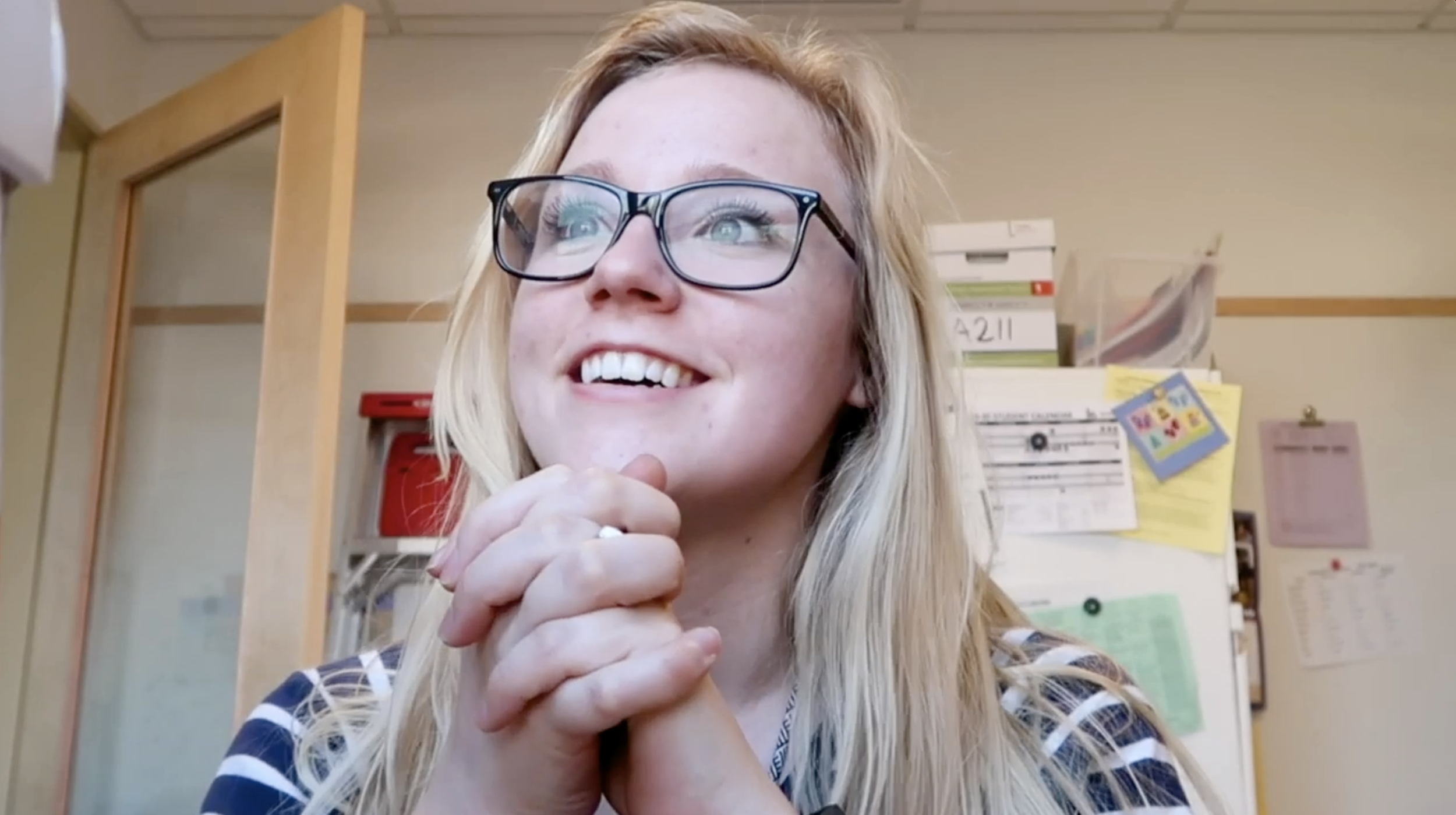
Eileen
Interview with Eileen Weir, Shankill Women's Centre
December, 2002
Thanks to Louise Spence of the Shankill Womens Centre, I had the pleasure of meeting Eileen Weir, who originally came on board as a volunteer in the centre and now works there full-time, coordinating the innovative Culture and Diversity project, among other things. Over the course of several weeks, Eileen put together some amazing events for us to videotape, including an informative round table discussion with several women users of the centre. On this recent trip back to Ireland, I had no funding for hiring crew but instead relied on the generous help of friends. For this interview, while I was videotaping, my friend and journalist Eliza Amon conducted the interview.
If you don't know anything about the Shankill area of Belfast, you may want to visit the Greater Shankill Partnership website for some history: http://www.shankillpartnership.com/about.htm.
EA: The first thing I wanted to ask you was how you got involved in the centre?
EW: I actually got involved in the centre
I was made redundant after working with same company for 19 years. And I can say this very clearly now but I couldnt have said it at the time, that I took a mental health illness. I had been very involved with the trade union movement with womens issues and equality and fair employment. When I was made redundant, I really felt that the bottom fell out of my world. I went into self-employment. I had just broke off from a relationship and was going through a very hard time. I knew that there was something missing.
I knew women who had come into the centre. Im local. And I just thought, "Right lets go down and see if I can take on a class or do
something within the Shankill Womens Centre." And when I came down I saw a lot of people here Id grown up with that I hadnt seen for a lot of years. People Id gone to school with were using the centre and were telling me about what the centre was all about.
At that time in the centre there was, I would say, maybe 10 or 12 women using the Drop-In facility who hadnt had any education
Some had left school 30 years, 35 years ago. I became a volunteer within the centre to try and build self-esteem of the women who werent taking part in the educational program - in the hope that, if we could build the self-esteem of the women within the Drop-In, that they would move into an education class. I had a lot of experience working within the trade union movement in building womens confidence and self-esteem, and equality issues and fair employment issues. So, as an individual I had a lot to offer, and I offered it on a voluntary basis.
There was a girl, Mary, from Footprints Womens Centre up in Poleglass who was on an exchange to shadow coordinate within this centre. All the womens centres had got together and the shadow coordinators were moved to different centres. And Mary was the shadow coordinator doing her time with us for 6 months. She had already got a grant off the National Lottery for her centre and introduced us to the possibility of getting a similar grant, which was to build self-esteem and confidence. The grant was £5,000, and Mary helped us fill in the application. It was all about education with a small "e" and not education with the big "E". Because a lot of women were intimidated with maybe reading, writing, spellingyou know, a lot of the barriers that were there. So I stated off working with the women on a voluntary basis, trying to build their self-esteem and confidence, which, in return, helped me get through I was actually going through. Because, I didnt realize until I actually started getting involved with the womens centre how down and how low I was. And it was only getting started in the womens centre and doing things voluntary that started to build my confidence and my self-esteem up again.
And then I was introduced to a class which the Greater Shankill Partnership was putting on at the time and I was asked, through the Shankill Womens Centre, to take part in this class. It was a Steps to Excellence class, which was personal development, all about yourself. And I havent looked back from that class. That class gave me goals. I hadnt had to set a goal in a long time. I had been in secure employment and everything was going well. I had good wages, you know, I was just very, very comfortable with my lot. A lot of women that I was involved with in the trade union movement at that time had said, "You dont know what its like to be working class. Youve a good wage." And they were right. I would have fought with them at the time. But they were right. And suddenly I was made to realize it because I was going from a good living to hardly an existence. When I did the Steps to Excellence class, I made a goal that I was going to get my profile higher within the community. I had made my mind up that that was the type of work that I wanted to get involved in. So then I had to start on me, and getting me right, because I couldnt work in the community if I wasnt happy with me. And I built my self-esteem and my confidence up through that Steps to Excellence class. Its funny, I now facilitate a Steps to Excellence class and I was looking through my book when we were goal setting last week; and when I looked at my book, I saw that all my goals have come true. And I would say that the womens centre made that possible.
|
|
|
|
 |
|
Relaxing between classes in the drop-in
|
|
After the voluntary working that I was doing in the Drop-In, the management committee here made a conscious decision that there needed to be somebody in there to work with the women in the Drop-In, at that level, to encourage them to move into the education program. And we were successful in getting a £5,000 grant, which would enable the worker to set a program to enhance the confidence of the women that were sitting in the Drop-In. The job then was Drop-In and Volunteer Coordinator, which I applied for. And probably because of my volunteer work and having already been involved with the women and having built the trust with the women, I got the job. Now, whether its my doing or not, I do not know, but we dont have 12 or 13 women sitting in the Drop-In now. Some people may look at that as a very negative thing, that the women arent coming into the Drop-In anymore. But I would prefer to look at that as a very positive thing. Because all our women who are coming in here now are learners; theyre going into the education classes. I wouldnt say that was my doing. You know, women do this for themselves. But sometimes thats all they need, just somebody to build their confidence up at that level rather than putting them in behind a desk with a tutor and having an 800 word essay to do or things like that, because that can be very intimidating. Especially if the education system has let you down.
EA: What kinds of things did you do specifically to help the people to get from the Drop-In to the classes?
EW: Through my training in the centre, they sent me to do an NVQ [National Vocational Qualification] Facilitators course, which I did do. And through the course, I met other women who were finishing the facilitators course and part of the NVQ was that you had to give 10 hours free back into the community. The course was free but that that was your donationto give 10 hours free back in the community. And two of the girls on one of the previous facilitators course got in contact with me and asked me could they come in and do a 2 hour session with the women here. Their intention was to do 2 hours in 5 womens centres. But after speaking to them for a while, I got them for the 10 hours.
So I had 5 mornings of 2 hours sessions to start off a program to encourage the women to try and build their self-esteem, their confidence. It wasnt teaching them or learning them anything new. I was using what I knew that they already had and trying to bring that out to make them feel good. I geared the classes that I knew was going to be achievable, and there was going to be no failures. Money management; stress management; how to run a budget; basic food and hygiene; welcoming and hosts courses. All very essential courses, just to build up your confidence. At the end of every week, we gave a certificate for taking part in that 2-hour session that they had actually achieved something.
It was to try to bring their own potential out
that they never thought that they even had. Everybody had it but they just didnt know they were using it. They were using it every day in the home. And they just took it for granted that, "We do this", and didnt put any value to it. So it was actually giving them courses that was going to give value to what they were doing every day in life, as mothers, as wives, as partners, as grandmothers. It was just bringing out what they were doing but letting them see it in a different way.
And then we done team building. I took them to a scout camp, and we had a one-day team building program. And we done activities like you know
we baked buns in a cardboard box
we done a wee bit of fun and games. They told me on the way up on the bus that they werent going to go over any assault course, so dont book them in to any assault course. But we had 4 hours at the scout camp and when all the activities was finished they said, "Are we not doing the assault course?" So I said to the scout leader: "Is there any chance
?" And every woman went over the assault course, helping each other over the assault course. And I felt that was great
that the team building had worked. And because it was fun, and because it was different from normal team building exercises, they were quite up for it. And now, out of the women that were in the Drop-In at that time, I would say every one took on an education class within the next year. Every one of them. They went into the Women Moving On class. And then into Women Progressing, which is OCN [Open College Network] accredited. They got accreditations out of it. Some of them went further. Some didnt. But thats ok. They done something that they never would have done if they hadnt been using the womens centre.
EA: Can you tell me about the services that are available for people once they do want to leave the Drop-In Centre and go on?
EW: Its very, very hard to put in words what the Shankill Womens Centre does
and I think not only the Shankill Womens Centre but
|
|
|
|
|
|
|
 |
|
Centre user Liz Greer: "I feel I'm a completely different person than when I started here 12 years ago. Even my family can see the difference in me."
|
|
|
 |
|
The creche
|
|
other womens centres as well. Our ethos is always the same. Our ethos within the Shankill Womens Centre is to provide what the women want. Well run education classes on whats in demand and what the women have asked for or would like to know more about.
We also provide an Advice Unit where people
Now the Advice Unit is also open to men because theres men out there who are one-parent families as well. And the Advice Unit would run several things behind closed doors; it is a totally confidential service. They would give advice maybe on filling in forms, on benefits, on domestic violence, they would provide a listening ear service.
If we cannot help somebody that comes in, within our Advice Unit or any part of the centre, we will make sure that we would get the proper people for them, and make the contact for them, and sometimes accompany them - because it is very hard sometimes to move out of your comfort zone to anywhere else. We also would represent women at tribunals
and, in some cases, men as well, for different reasons.
We also provide a childcare service, to remove the barriers from women who have children who would like to get back into education. Childcare is very expensive. We provide a childcare service that if you take a class on within our centre, we will mind the child for the duration of that class for one pound a session. So we provide affordable childcare in a proper, registered childcare environment. We also have a Young Womens project. We have a Young Mothers project. We have the Cultural and Diversity Project. The Learners Support program - where if theres a woman coming in who couldnt keep up the class or for some other reason didnt get what the class was about, we have a one-to-one service. So if people have difficulty in grammar or in understanding, we would have a learner support worker who would sit on a one-to-one basis and help that woman through whatever she needs to be helped through.
"No" is not a word that we like to use within the centre. If we can get it or we can get it provided, we will try to do it.
I would say that would cover what we do on paper, but I couldnt tell what we cover on a day to day basis. We are a community, voluntary organization. We depend on funding to keep us going. And we have been known to move furniture for people. We have been known to do a lot of things thats not in our remit to do. We blow up photographs. We help pensioners across the road. We work with the people in the community; we work with women in the community; we network with other organizations, not only within our own community but across the divide here. We work very, very closely together. And if we cant do it, we will get somebody who will do it, and we will do it with them. So, if you read the Development Plan or you read somebodys job description, it doesnt stop there thats the minimum that well do.
We work with all age groups. We have a lady here who is 72 years of age, and this time last year was too old for education. "Oh its way beyond me, Im too old." Now, this was a lady that was going to the leisure centre and doing the treadmill but she didnt need any education. And that lady now has a Women Moving On under her belt; shes a Women Progressing under her belt; she has a Steps to Excellence under her belt; shes in the Cultural and Diversity Program; shes doing creative writing. And this was a woman a year ago who told me that she was too old. Shes made new friends, its given her something to get up for in the morning. She really loves it. Shes actually sitting in the Drop-In at the minute but shed go through me if I even suggested that you even spoke to her. So it doesnt matter what age you are. Shes 72 and its given her a new lease on life.
We also have the Young Mothers group who meet here every Wednesday. Young mothers do sexual health education; they do peer education; theyre learning computers; they visit other groups. We have our Young Womens Project our young women have won disco competition throughout the whole of the British Isles and the United Kingdom; and they come home with trophies every time they go away. They also do drug awareness. They also have the baby dolls that cry; they take them home for a weekend to be mommies. They do the peer education as well. They are involved in drama. Theyre only back from Drogheda by doing a cross-community residential in there.
So, you know, we have different projects but every project is all about the same thing; its all about building self-esteem and confidence; its all about working together, understanding each others cultures, doing the cross community and within the community work.
Looking back, again when I was made redundant, I bought a black taxi and taxied self-employed from the airport and taxied from city centre. Done all the tours with the Americans up the Shankill and down the Falls. It was the easiest £30 Ive ever made in my life. But it just wasnt for me. OK, I was meeting the community. I then was a driving instructor which again was good to meet people on the one-to-one. But as soon as I came into the womens centre, I knew. It wasnt as if I had left employment and come straight in here. I had tried other things. And other things werent working. Theres not a day that goes by within the womens centre that I dont learn something new
either about myself or about other people or about society in general. I moved from a situation where always helping to not helping, and now Im back, and if I can make a difference with one woman in here, I feel, you know, that Im doing my job. Im doing what Im being paid for.
I left school with no education or no proof of education. Ive now NVQs that I never would have had. Because the policy in here is that we get training as well. Im now involved in something thats very, very close to my heart: The project of Culture and Diversity. Were seeing women coming in now who are interested in other peoples cultures, and who are moving away from the issues that have haunted us for the last 30 years. Theres women coming in here now asking about things that they never would have asked about 10 years ago. I think thats down to the atmosphere of the Shankill Womens Centre. Its a safe environment. It doesnt matter who you are or what you are, if youre a woman, youre welcome. The whole centre is a confidential, trust-building, friendship-making place.
|
|
|
|
|
|
|
 |
|
Centre user Donna McElroy : "I don't think the politicians realize how much good the centres are doing. I think women's centres are saving the government a hell of a lot of money."
|
|
The women that come into the centre make the centre possible. They make it work. Were employed in here to help these women. But if these women didnt come in, we wouldnt be here. They provide a service for themselves. Because youll get them in their tea breaks and at their lunch times, coming in talking to each other, and thats a service of its own. The women themselves, sharing their own feelings, their own emotions, and being able to do it without thinking that somebody is talking about them behind their back. So you know, they own the centre; they have ownership of the centre. And I firmly believe that while the women have the ownership and have an involvement in how the centre goes, the centre will be here for a long, long time. Provided we get the funding to keep us going. Or we get core funding. I think thats whats badly missed. We get a project to do, and youre getting 2 years funding to try and achieve something that politicians havent achieved in 30 years. But were going a long way of filling the gap of the bread and butter issues and whats happening on the ground. Because were on the ground; were working on the ground. We live in the community. And were not opposed by going across to the other divides within
the Shankill, the Falls, were a street away, and its not a long journey. All the women in here take part in cross-community and inter-community and in diversity. And I think that sums it up: no matter where you go in the centre, its all about the women. Its all about what they want and how they want to do it.
EA: Im wondering why you think there are so many womens centres in Belfast?
EW: So many? Theres fourteen.
EA: It seems like a lot
it doesnt to you?
EW: No, its not enough. I think the history and the impact of womens centresits never really paid attention to
There was a big profile a few years ago because Falls Womens Centre wasnt getting any funding. And the way they covered it in the media, Shankill was getting it and Falls wasnt. So the Shankill and the Falls, the two womens centres, got together, and they fought each others campaigns, and they worked together on the funding issue. And they didnt allow the politicians to put up any barriers between us.
I would say the Falls Womens Centre and the Shankill Womens Centre are the 2 longest going womens centres. Were here 15 years and the Falls was round about the same time. And there is now a network of womens centres throughout Belfast. And people say that 14 womens centres is a lot. But when youve worked with 30 years of conflict and I hate going back to conflict, cause were never gonna go back there, not in my eyes
You have women who reared the families when the husbands were in prison, for whatever reason. Reared the families, put the bread and the butter and the milk on the tables every day. They were tied to the homes, even more so, because of what was happening within the environment. Peace brought
The Good Friday Agreement brought the men out of jail who never had been fathers, who had to re-learn to be fathers, how to fit into society. Some of those men were probably in prison for 10, 15 years. Things change a lot in that time. Womens role was...it was like the war years: the women done the work and when the men come home from the wars, the women then had nothing to do. And womens centres were probably created because of those reasons, that women needed to keep themselves very much active, because they had been active for a long, long time.
And I would say 14 isnt enough. We could do with another 14. I mean, you take an area like the Greater Shankill, theres one womens
|
|
|
|
|
|
|
 |
|
Centre user Kate Campbell: "I wouldn't know where to go [if the centre was closed down]. I depend on the centre, so I do."
|
|
centre in the whole of the Greater Shankill. You know, is that enough? We can only provide what we can provide, but theres more women, if there was more centres, that would use them. Were full of our capacity. Were doing outreach work because we dont have the facilities to do it where we are and we outreach to other groups
who dont come to us, we go to them. If we have do all this outreach work, are there too many womens centres?
We still live in a culture
theres still people who left school when they were 15, they went into work, they got married, they had families. Education wasnt very important to women
or to mothers who had children who were girls. I mean, Im from a generation where my brother was encouraged to stay on in school as long as he wanted. But I left when I was 15 because I would be getting married and I would have a child and I would be the wife and I wouldnt need to go out to work. We still have that generation about, where there are a lot of women who finished education at 14 or 15 years of age and done nothing. Womens centres are actually bringing those women on. And women who come through our doors go on to University, go on to employment. Were not just here to bring women and educate, educate, educate with no outcome. Our women move on into meaningful employment. They move on to volunteering maybe in another organization, after coming through the volunteer scheme within the centre.
Last year, I had 15 volunteers, who werent being paid and doing voluntary work. As a paid employee, I was looking after 15 women. Theres other organizations who were doing the same as what I was doing but not one worker could get funded, so they lost 16 good community workers. Womens centres support volunteers who dont get paid in the community - but we support them if they need help, if they need advice, if they need a wee bit of photocopying done. So we are a support to a lot of other women out theres thats doing voluntary work within their own wee communities.
EA: Do you consider what you do activism, or call yourself an activist?
E: I dont really
Theres myths behind womens centres and probably within the Greater Shankill. And people are starting to say that were not what they thought we were. We have new women coming in and before they came in their perception - and we ask women, because we like to get a feedback from the women that do use us , we ask them, "What did you think before you came in and what do you think now?" And a lot of the perception was that it was a battered wives home, that you only came into this womens centre if you were getting beat up. Not true. There was another myth that women just come in here and sit in wee cliques. Not true. There are women that sit together, theres women who always sit together - it comforts them, theyre entitled to that space - but theyre not unfriendly and theyll talk to other women coming in. So the clique myth is not true. We also, because were adjacent to North and West, theres a myth that were part of the Health and Social Services, which is taboo because there is a stigma behind social services and things like that. Not true. Were on our own.
|
|
|
|
 |
|
Centre volunteer Lorraine and longtime centre user Kathy Vello
|
|
The thing I would love to see mostand this would probably answer your question as to whether Im an activist or not, or a feminist or notthe thing that I would like to see most within the Greater Shankill is a Mens Centre, because we keep getting, "What about the men? What about the men?" We would love to see a Mens Centre. We would support them. We would help them. Were not going to do it for them, but we would be there to support them. If there was a Mens Centre within the Greater Shankill, the people that would benefit from that Mens Centre is themselves, their wives or their partners, and their children. Because what we deliver in this womens centre is something thats being passed down into the family home. If the mother has self-esteem and has confidence, that is bound to affect her children. And I would love to see men doing that too. Its not within our remit to do that but wed support anybody that would set it up.
EA: Does the word "activism" have bad connotations? Is that why
is that a concern or
?
EW: No, I would say that yes, I am an activist, but Im an activist within the community. Im a worker within the Shankill Womens Centre and because of what the Shankill Womens Centre has done for me, I want to share that with other groups that I am involved with. I still do voluntary work, because I wouldnt be here today without my voluntary work. So I still give a certain amount of voluntary time to the community. And if thats what an activist is
yes, in that way, I would be.
To be a feminist would be a completely different thing. I dont see myself as a radical feminist. I probably am a feminist because Im a woman and I work in an organization that helps women to build their self esteem, their potential of being employed, to try to get people off the benefit scheme, to give them a better quality of life. And if thats what calls me a feminist, yes I am, Im guilty of that. But I dont see myself as that. I believe in equality and people to be treated right and people to have a fair chance and a fair go. In order for people to be treated on equal terms we need to start off at an equal base. And, unfortunately, the education system let the women down - and have let the women down here in Belfast and in Northern Ireland in general for a lot of years. Not only that, we have a very, very high rate of failures within the 11 Plus in the Greater Shankill area. And if our mothers cant understand the homework that the children are coming home with, how are the children going to understand the homework when they cant get that support at home? We try to prepare the mothers for helping the children to achieve what they werent able to achieve when they were younger. So that when the children say, "Mommy, can you help me with this homework?", the mother can turn around an say, "Yes". Were not at the stage yet where all mothers can say, "Yes, I can." And thats where Id love to be: Where all mothers can actually say to their children: "Do you need any help with that homework?" instead of running away from it.
MT: Can you just explain, because we dont have it in the States, what the 11 Plus is?
E: We have a system here of the 11 plus and this is an exam that you do when youre ready to move from Primary Education into Secondary Education. Its a transfer test to see what school you go to. If you pass, youll get into a good school; if you fail, at 10 years of age, youre a failure for life. Thats the stigma thats behind it. And thats not the message to send children with into secondary or grammar stream education, with a label that says, "Hes smarter than me," or, "Shes smarter than me," or, "Im a failure". Its a very unfair test because if you pass, youll get the best of education, and if you fail, youll get the bottom of the pile.
Theres a big report thats being done at the minute. Theyre working very hard here to do away with it. We should be looking at how were
|
|
|
|
|
|
|
 |
|
Eileen teaching the Culture and Diversity class
|
|
teaching the children. Is there a different system? If theres children that are a wee bit slower, then they need that special attention. You know, we should have a better system of bringing children on, and the 11 Plus isnt the one. How can you fail at 10 years of age? You see, its all about where youre educated and, even if you do pass the 11 Plus and go into a grammar stream, if youre coming from a working class background, the school fees and the things them schools are asking you for, people cant afford it. So not only are they being starved of an education that they deserve, when they do pass, a lot of their mothers cant afford to send them to these grammar schools because of school feels and different things that goes along with going to that stream of education. And, really, it should be available to everybody, whether you have money or not. Everybody deserves the same chance - or were still going to end up in the same situation in another 20 or 30 years again, where theres going to be part of our society havent got a fair go and it will be the education system, once again, that will have a lot to do with it.
Related Transcripts:
Related Resources:
- Article about loss of funding at SWC:
- History of the Shankill:
- Info about education and the Early Years Project in the Shankill:
- Women's Support Network (netowkr of women's centers and orgs):
- Cross Community organizations:
top of page